Find the best time to visit Riga with a month-by-month guide to weather, crowds, shoulder seasons, winter events, and when to book tours.
Best Time to Visit Riga
The best time to visit Riga, in plain terms, is May or early September. You get daylight stretching past 9 PM, outdoor cafés in full swing, and Old Town streets you can actually walk through without shuffling behind a tour group holding an umbrella marker. Temperatures sit comfortably between 12°C and 20°C, which is warm enough for sightseeing all day without the sticky humidity that sometimes settles over the Baltic region in late July.
That said, "best" depends heavily on what you want from the trip. If you're chasing festivals, open-air concerts, and the Daugava Light & Music Show season, summer — specifically June through August — is non-negotiable, even though it brings the thickest crowds and the highest hotel rates of the year. If you'd rather see Riga's Art Nouveau facades without fighting for sidewalk space, shoulder season wins every time.
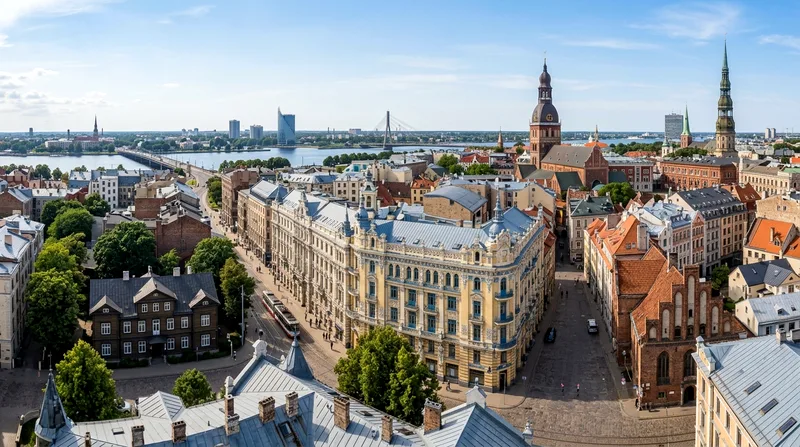
I'd avoid late July specifically if you're sensitive to heat or crowds — Riga's Old Town square gets genuinely packed, rivaling what you'd see in Krakow's Main Square during peak summer. Compare that to a Tuesday morning in Riga during mid-May, when you can sit at an outdoor table at a café on Doma laukums without waiting.
May as the optimal month
May delivers the clearest case for "when to go to Riga." Average highs climb into the high teens Celsius, parks and riverside paths turn green, and the city's outdoor tour operators start running full daily schedules again after the quieter winter stretch. Hotel rates are typically lower than June through August — often 20-30% cheaper for comparable Old Town properties, based on general seasonal pricing patterns across Baltic capitals. Flights from other European hubs also tend to be less competitive to book in May than in peak July, so fares can be friendlier too. The only real downside: a handful of beach-focused day trips to Jurmala feel premature, since the Baltic Sea water stays cold well into June and few locals are swimming yet.
Summer versus shoulder season trade-offs
Summer in Riga — June, July, August — means long days (sunset after 10 PM in late June), full event calendars, and every café terrace open. But it also means accommodation prices peak, popular walking tours fill up faster, and day trips to Sigulda's forests and castles get busier on weekends. Shoulder season trades some of that energy for breathing room: smaller groups, easier restaurant bookings, and a noticeably calmer version of the same city. If you're a photographer or someone who dislikes crowds in photos, shoulder season is the clear winner. If nightlife and festival atmosphere matter more to you than elbow room, summer still takes it.
Month-by-Month Weather and Crowds
Riga's climate follows a fairly predictable northern European pattern, but the swings between months are sharper than many first-time visitors expect. Winters are genuinely cold and dark; summers are mild rather than hot. Understanding Riga weather by month helps you pack correctly and avoid being caught in a July downpour without a jacket — rain doesn't disappear just because it's warm.
May and September offer the strongest balance of mild weather, lower crowds and full tour schedules, while July and August trade comfort for peak atmosphere and higher prices.
Best time to visit Riga by season: weather, crowds and tour availability compared
| Season | Avg. Temp Range | Crowd Level | Tour Availability | Best For |
|---|---|---|---|---|
| Winter (Dec-Feb) | -3°C to 2°C | Low | Limited, mostly indoor | Christmas markets, New Year, budget travel |
| Spring (Mar-Apr) | 2°C to 11°C | Low to moderate | Expanding, some outdoor | Easter events, fewer crowds |
| May | 10°C to 18°C | Moderate | Full schedule | Best overall balance |
| Summer (Jun-Aug) | 17°C to 23°C | High | Full, often sold-out | Festivals, nightlife, long days |
| Autumn (Sep-Oct) | 6°C to 15°C | Low to moderate | Full, tapering in Oct | Foliage, quiet sightseeing |
Figures are typical seasonal averages; actual conditions and tour schedules vary by year, so check current availability when booking.
Temperature ranges and precipitation patterns
January and February average around -3°C to 1°C, with snow cover common but not guaranteed every winter. March and April see temperatures climb slowly, from roughly 2°C to 11°C, with a fair amount of rain and occasional late sleet. May through August is the warm stretch, peaking around 20-23°C in July, though Riga rarely sees extreme heat — days above 28°C are unusual. September cools gradually, October brings steady rain and falling leaves, and by November the city is back to single-digit highs and short daylight hours. Precipitation is spread fairly evenly across the year rather than concentrated in one obvious rainy season, though late summer thunderstorms and autumn drizzle are both common enough that a compact umbrella earns its space in any bag.
Peak season visitor statistics
The prime tourist season in Riga runs roughly from April to September, matching the broader Baltic travel pattern you'd see in Tallinn and Vilnius too — all three capitals see cruise ship arrivals, school trips, and European city-break travelers concentrate in these months. Town Hall Square, the House of the Blackheads, and the area around St. Peter's Church visibly fill up on summer weekends, and TripAdvisor listings for Riga's top attractions show review volume spiking noticeably from June onward. Outside this window, visitor numbers drop off sharply — which is good news if you dislike queues, but it also means some seasonal attractions and river cruises reduce their schedules or close entirely.
Seasonal Tour Availability and Activities
Tour availability in Riga tracks the weather fairly closely, which matters more here than in a city with milder winters. Outdoor-heavy experiences — river cruises, bike tours, day trips to Sigulda or Jurmala — run on reduced or seasonal schedules outside April through October. Indoor options, from Art Nouveau architecture walks to museum visits and food tours through the Central Market, operate year-round and make a reasonable backbone for a winter itinerary.
Free walking tours and group bookings
Riga Free Tours and similar outfits typically run daily departures through the warmer months, often with two time slots to spread out group sizes, and scale back to one daily departure or weekend-only in deep winter. Groups in July can run considerably larger than a quiet March departure, which affects how much individual attention you get and how easily you can hear the guide near traffic on busier streets. If you want a smaller group experience, book an early morning slot or travel in shoulder season — both reduce numbers without costing you the experience itself. Tipping guides (these tours are donation-based) is standard practice; budget roughly €5-10 per person regardless of season.
Outdoor attractions by season
Jurmala's beach and pine forests are genuinely worth a half-day trip, but only from late May through September — outside that, the resort town feels shuttered and a little bleak, with many cafés closed. Sigulda's castle ruins, cable car, and bobsleigh track operate differently depending on season: summer brings hiking and the cable car ride over the Gauja Valley, while winter adds a (weather-dependent) bobsleigh experience that doesn't exist in warmer months. The Daugava Light & Music Show, where illuminated fountains and projections animate the riverfront, typically runs on selected evenings through the warmer season — check current dates before planning an evening around it, since schedules shift year to year.
Shoulder Seasons: Spring and Autumn
The Riga shoulder season — broadly March-April and September-October — is where value-conscious travelers should focus their attention. Flights and hotels cost less than peak summer, major sights stay open on full schedules, and you avoid both the summer crush and the winter cold. The trade-off is weather unpredictability: a sunny 15°C afternoon can turn into a cold, wet evening within a few hours, so layering matters more here than in any other season.
March-April weather and Easter events
March is transitional and often still cold, with temperatures hovering near freezing early in the month and only reliably warming by mid-to-late April. Easter brings specific seasonal markets and events to Riga's squares, with decorated eggs and traditional food stalls appearing around the Old Town — smaller and less commercial than the December Christmas markets, but worth timing a visit around if you're already considering spring. Pack a proper rain layer; April showers here are frequent rather than occasional.
September-October conditions and fewer crowds
September is arguably underrated — still mild (12-18°C), with noticeably thinner crowds than August and golden light along the Daugava River that photographers tend to prefer over the flatter light of midsummer. October cools faster and rain becomes more consistent, but foliage along the riverside parks and in Sigulda's valley is genuinely attractive, and hotel rates drop further still. If you're deciding between Riga and Vilnius for an autumn city break, both offer similar October conditions, but Riga's compact Old Town makes it easier to cover on foot in shorter daylight hours.
Winter Travel: December Through February
Riga winter weather is cold, often damp, and dark — daylight can shrink to around 6-7 hours by late December. That sounds like a deterrent, and for sightseeing-heavy itineraries, it partly is. But Riga does winter atmosphere well, arguably better than some comparable cities: the Christmas market in Doma laukums, with mulled wine stalls and a large decorated tree, runs from late November into early January and gives the Old Town a genuine warmth that contrasts with the weather outside.
New Year festivities and nightlife
New Year's Eve in Riga draws crowds to the Old Town for fireworks over the Daugava, and the city's bar and club scene — concentrated around Vecrīga and Skārņu iela — runs later and busier than at almost any other point in the year. Hotel availability tightens around this period despite it being winter, so book well ahead if you're targeting late December specifically. Compare this to Tallinn's quieter New Year scene, and Riga comes out as the livelier choice for nightlife-focused travelers in the Baltic region during this window.
Hotel heating and indoor attractions
Heating standards in Riga hotels are reliably good — this is a cold-climate country, and even budget accommodations are built for it, unlike some southern European properties that treat winter as an afterthought. Indoor attractions carry more weight on a winter itinerary: the Art Nouveau Museum, the Museum of the Occupation, the Central Market's covered pavilions, and spa visits in Jurmala all work regardless of temperature outside. What doesn't work well in winter: river cruises (mostly suspended), the Daugava Light & Music Show (seasonal, not running), and any day trip relying on long daylight hours.
Frequently asked questions
What is the best time to visit Riga?
May and early September offer the best combination of mild weather, manageable crowds, and full tour schedules. July and August are warmest and liveliest but also the most crowded and expensive, while December offers strong Christmas market atmosphere if you don't mind cold, dark days.
When is the prime tourist season in Riga?
The prime tourist season runs from April through September, with the heaviest crowds concentrated in June, July, and August. This matches the broader pattern across the Baltic region, including Tallinn and Vilnius, where cruise arrivals and school-holiday travel peak in midsummer.
What is the weather like in Riga by month?
Winters (December-February) average -3°C to 2°C with possible snow; spring (March-April) ranges from near freezing to around 11°C with frequent rain; summer (June-August) peaks around 20-23°C; autumn (September-October) cools from the mid-teens down to single digits, with October being notably wetter.
Is May a good time to visit Riga?
Yes — May is widely considered the optimal month, with temperatures in the mid-to-high teens Celsius, full tour and attraction schedules, and lower hotel prices than the June-August peak. The main drawback is that the Baltic Sea at nearby Jurmala is still too cold for swimming.
Should I visit Riga in summer or winter?
Choose summer for long daylight hours, outdoor festivals, river cruises, and the Daugava Light & Music Show season. Choose winter if you specifically want Christmas markets and New Year nightlife, and don't mind limited daylight and suspended outdoor tours.