Riga Card vs individual tickets compared with a break-even analysis for 1-, 2-, and 3-day trips, real cost scenarios, and where to buy each.
Options at a glance
Deciding between a Riga Card and individual tickets comes down to three questions: how many days you're staying, how many paid attractions you plan to enter, and how often you'll ride a bus or tram rather than walk. Riga's Old Town is compact enough that many visitors barely touch public transport for a day trip, which immediately changes the math.
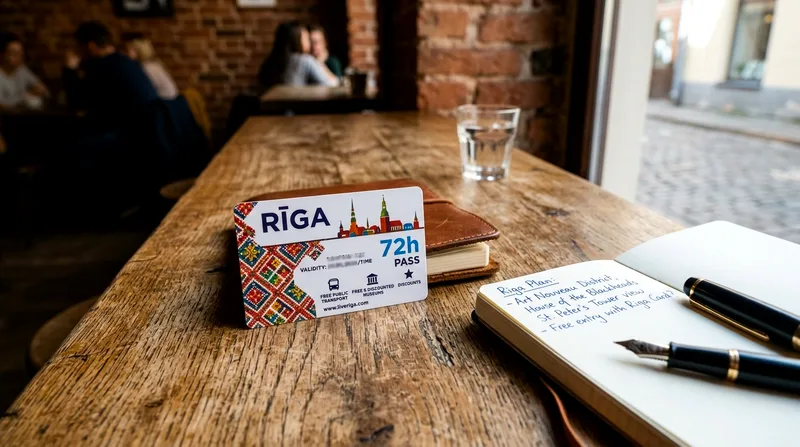
The Riga Card is a prepaid city pass sold in 24-hour, 48-hour, 72-hour, and sometimes longer variants, bundling public transport with free or discounted entry to a set list of museums, tours, and a few restaurants. Individual tickets, by contrast, are pay-as-you-go: a single ride on a bus, tram, or trolleybus, bought either as a paper ticket, through the Rīgas Satiksme mobile app, or with a reloadable e-talons card from kiosks and machines.
Riga Card coverage and duration
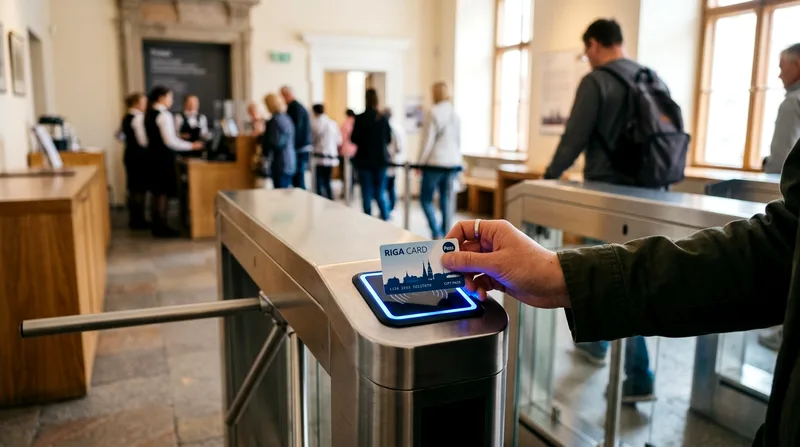
The card covers unlimited rides on Rīgas Satiksme city transport — buses, trams, and trolleybuses within Riga — for the full validity window you buy, whether that's 24, 48, or 72 hours. It also includes free entry to a rotating list of around 20-plus museums and sights (historically things like the Riga Cathedral, the Central Market tour, and several smaller museums), plus discounts of roughly 10-25% at selected restaurants, tour operators, and shops. It does not cover the airport bus (Bus 22) as a free ride in every version, so check the current terms before assuming full airport coverage. Validity starts from first use, not from purchase, which matters if you buy it the night before to save time the next morning.
Individual ticket types and pricing
Riga's public transport runs on a simple fare structure: a standard single-ride ticket bought from the driver costs more than one bought in advance via the e-talons card or app, so buying ahead is almost always worth the few minutes it takes. There are also 90-minute and 60-minute transfer tickets in some formats, letting you change vehicles within the window on one fare — useful if your route needs a transfer across town. Day tickets (24-hour transport-only passes, without museum perks) exist separately from the Riga Card and are worth comparing if attractions aren't your priority. For exact current fares, check the Rīgas Satiksme app or ticket machines at the time of travel, since prices are adjusted periodically.
Head-to-head comparison: cost, time, effort
On paper the Riga Card looks like the smarter buy — "unlimited transport plus free museums" sounds like an obvious win. In practice, it's a bet that you'll actually use enough of what's bundled in. A family that rides transport twice a day and visits one paid museum will often come out ahead with single tickets; a couple visiting four museums and riding transport six times a day will do better with the card.
The Riga Card only beats individual tickets once daily transport rides and paid attraction visits combined exceed roughly four to five paid activities per day.
Riga Card vs individual tickets: cost, coverage, and convenience compared
| Option | Cost style | Transport coverage | Attraction access | Best trip length | Convenience |
|---|---|---|---|---|---|
| Riga Card (24h) | Fixed daily rate | Unlimited city transport | Free/discounted entry to 20+ sights | 1-day with heavy itinerary | High — single pass, no top-ups |
| Riga Card (72h) | Fixed multi-day rate | Unlimited city transport | Free/discounted entry, multi-day | 3-day full exploration | High |
| Single ticket (advance) | Pay-per-ride | One ride only | None | Light transport use | Medium — need app or card |
| 90-minute transfer ticket | Pay-per-ride | One ride + transfers within window | None | Cross-town errands | Medium |
| 24-hour transport pass (no museums) | Fixed daily rate | Unlimited city transport | None | Transport-heavy, few museums | High |
| Bus 22 airport ticket | Pay-per-ride | Airport–center only | None | Arrival/departure day | Medium |
Approximate relative costs only; check Rīgas Satiksme and Riga Card official pricing before you travel, since fares are adjusted periodically.
Upfront cost and daily breakdown
Think of the Riga Card's price as a fixed daily rate that only becomes a bargain once your actual spending — transport rides plus museum entries — exceeds it. A single tram ride bought in advance costs a small, fixed amount; a paid museum entry (the Riga Motor Museum or the Art Nouveau Centre, for instance) typically costs several euros each. Add up a realistic day: two transport rides plus two museum visits often approaches or exceeds the daily card rate, while one transport ride and a walk through free Old Town sights usually stays well under it. The card's value scales with activity level, not with the number of days alone.
Convenience and time savings
There's a real, if harder-to-price, benefit to not fumbling for exact change or re-topping an e-talons card every day: you tap and go. For families with kids, or senior travelers who'd rather not queue at a ticket machine in the rain, that convenience is worth something even if the pure math is close. The trade-off is that the Riga Card requires a slightly bigger upfront commitment and decision-making before you've explored — you're prepaying for a plan, whereas individual tickets let you decide day by day, trip by trip, with zero risk of paying for unused capacity.
Scenario-based breakdown: 1, 2, and 3-day trips
Numbers matter more than general advice here, so let's walk through three common visitor patterns.
1-day visitor: light transport use
If you're on a stopover — say, a day between a Tallinn-Riga bus and an onward FlixBus to Vilnius — you'll likely stay within walking distance of the Old Town, the Central Market, and the riverside. Two or three transport rides plus one paid museum entry is a typical light day. Add it up with advance single tickets and a museum ticket, and you'll usually land below the cost of a 24-hour Riga Card. For this visitor, individual tickets win, and the Riga Card is money left on the table.
2-day visitor: moderate attraction visits
This is the break-even zone. A couple spending two days, riding transport four to six times total, and visiting two or three museums (maybe the Riga Art Nouveau Centre and one more) will find the two costs converging. If you're also using transport to reach Jurmala's edge or a further-out neighborhood like Mežaparks, the extra rides tip the scale toward the card. Run your own numbers: count planned rides, count planned paid entries, and compare against the 48-hour card rate before buying.
3-day visitor: full city exploration
A 3-day visitor doing a fuller circuit — Old Town, Art Nouveau district, a market tour, maybe a half-day transport-based trip toward Sigulda or back from the airport — will typically make 8 to 12 transport rides and visit 3 to 5 attractions. At that volume, the 72-hour Riga Card almost always beats paying separately, sometimes by a meaningful margin, because both the transport savings and the attraction discounts stack. This is the scenario the card is actually designed for, and it's where "is the 3-day Riga Card worth it" has its clearest yes.
Who should choose which option
There's no universal winner, which is exactly why this needs a trip-type answer rather than a blanket recommendation.
Best for Riga Card
Choose the Riga Card if you're staying three days or more and plan to hit at least three paid attractions, or if you're a family with children bouncing between museums, the zoo area, and transport several times a day. It also suits senior travelers who prefer not to manage small change or a transport app, and European travelers doing a multi-city loop — Riga, then on to Tallinn or Vilnius by bus — who want the planning done once. The card removes decision fatigue: no calculating fares, no separate museum queues in many cases.
Best for individual tickets
Choose individual tickets if you're a solo traveler or couple on a 1-day visit, if you're mostly walking the Old Town and skipping paid museums, or if you're a budget-conscious traveler comparing Riga against a cheap stopover in Krakow or Gdansk where you'd rather save the museum budget for one standout sight. Buy through the Rīgas Satiksme app or an e-talons card rather than from the driver — the onboard price is consistently higher, and that gap alone can wipe out any perceived convenience of paying cash.
The verdict: when Riga Card pays off
The Riga Card pays off when your itinerary is dense, not simply when your trip is long. A 3-day trip spent mostly walking and people-watching along the Daugava won't benefit from the card any more than a 1-day trip would. What tips the balance is activity count: once you're combining five or more transport rides with three or more paid attractions inside the card's validity window, the math turns in its favor, often by a noticeable amount once you add it up ticket-by-ticket.
Compare that to Tallinn, where the Tallinn Card has a similar break-even logic but a denser cluster of free museums within easy walking distance, making it slightly more forgiving for shorter stays. Vilnius, by contrast, has no equivalent citywide pass at all, so visitors there default to single tickets regardless of trip length — a useful reminder that Riga's pass system is genuinely a calculation worth doing, not a rubber-stamp purchase. If you're building a wider Baltic itinerary that also includes a Sigulda day trip or a few nights in Jurmala, remember those excursions sit outside the Riga Card's city transport zone, so budget separately for regional trains or tour transport.
Before buying either option, check current prices when booking — exact fares shift periodically, and the booking widget on this site shows live options so you can compare current Riga Card and transport ticket prices before you commit.
Frequently asked questions
What is the cost of a single ticket in Riga?
A single advance-purchase ticket for city buses, trams, or trolleybuses costs a small fixed fare, with a cheaper rate if bought via the e-talons card or Rīgas Satiksme app than if bought from the driver onboard. Prices are adjusted periodically, so check the app or a ticket machine for the current fare before traveling.
How much does a 3-day Riga Card cost?
The 72-hour Riga Card is priced at a flat multi-day rate covering unlimited city transport plus free or discounted entry to a published list of museums and sights. Exact pricing changes periodically, so compare it against your planned number of transport rides and attraction visits using the current official price before buying.
When does the Riga Card become cheaper than individual tickets?
Generally once you're making five or more transport rides and visiting three or more paid attractions within the card's validity window. Below that activity level — a light sightseeing day focused on the free Old Town — individual tickets almost always cost less.
Are there discounts for students or children on passes?
Yes, Rīgas Satiksme and the Riga Card both typically offer reduced rates for children and sometimes students or seniors, though exact age cutoffs and discount percentages vary and are confirmed at purchase. Always carry ID or a student card, since discounts are usually checked on the spot by transport inspectors or museum staff.
Where can I buy a Riga Card or individual tickets?
The Riga Card is sold online in advance, at the airport, and at tourist information points in the Old Town. Individual transport tickets come from the Rīgas Satiksme mobile app, ticket machines at stops, kiosks, or — at a higher price — directly from the driver.