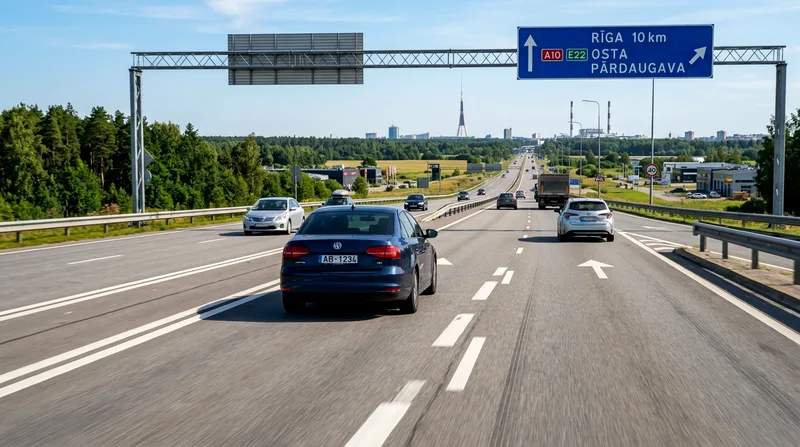
Understand Riga car hire insurance: CDW, SCDW, theft cover, deposit holds and excess waivers explained before you rent a car in Latvia.
Riga Car Hire Insurance & Excess – What You Need
Insurance jargon is the most confusing part of hiring a car in Riga. Every booking screen shows a price, then a second screen full of acronyms — CDW, TP, SCDW — and a deposit figure that can be ten times the daily rental rate. None of this is unique to Latvia, but the excess amounts here tend to sit higher than in Western Europe, and the upsell pressure at the Riga Airport counter is real.
This page breaks down what's actually included when you hire a car in Riga, what the excess means in practical terms, and when it's worth paying extra to reduce it. The short version: basic cover is rarely enough on its own, third-party excess insurance is usually cheaper than the desk's offer, and you should decide your approach before you land, not while a queue forms behind you at the counter.
Standard Cover Included with Riga Car Hire – CDW, TP and Theft
Almost every rental agreement in Riga includes three things by default: Collision Damage Waiver (CDW), Third Party liability (TP), and Theft Protection (TP/TW, sometimes labelled separately). Third-party liability is a legal requirement across the EU and covers damage you cause to other people or their property — it's not optional and it's not really a selling point, despite how it's sometimes presented.
CDW is where most confusion starts. It sounds like full protection, but it isn't. CDW reduces your financial liability for damage to the rental car itself down to a set figure — the excess — rather than eliminating it. If you scrape a wheel arch or crack a bumper, you're still on the hook for repair costs up to that excess amount, even with CDW active. Theft protection works the same way: it caps your liability if the car is stolen, but doesn't zero it out.
One detail that catches people off guard: standard CDW in Latvia frequently excludes damage to tyres, windscreens, the undercarriage and the car's interior. If a stone chips the windscreen on the road to Sigulda, or you clip a curb on a gravel back road, that damage may fall outside CDW entirely and go straight to you at full cost. Read the exclusions list in the rental agreement, not just the marketing summary on the booking page — they're usually printed in smaller text further down the terms.
What doesn't change across suppliers
Regardless of which company you book through at Riga Airport or in the city centre, the legal minimum — third-party liability — is standardised by EU rules and won't vary much in substance. What varies enormously is the excess amount, the exclusions list, and whether theft cover requires you to keep the key fob away from the vehicle's visible interior when parked. Compare the excess figure and exclusions, not just the headline daily rate, when weighing one offer against another.
What the Excess Actually Means and How Much to Expect
The excess — sometimes called the deductible — is the maximum amount you'd pay out of pocket if the car is damaged, stolen, or involved in an incident, even with CDW. Think of CDW as insurance with a cap, and the excess as that cap. In Latvia, typical CDW excess runs from roughly €500 for a small economy car up to €1,500 or more for SUVs, vans, and premium categories. Automatic cars and 7-seaters often sit at the higher end of that range too.
Separately from the excess, rental companies place a deposit hold on your credit card at pickup — usually matching or exceeding the excess figure. This is not a charge; it's a temporary block on your available credit, released (typically within 7-21 days of return) if the car comes back undamaged. The practical problem is that this hold reduces your spending power on that card for the duration of your trip, which matters if you're also paying for Jurmala hotel stays or a Baltic road trip on the same card.
A deposit hold and an actual charge are different events, but rental desks don't always explain the distinction clearly. If damage is found at return, the company deducts repair costs from the held deposit up to the excess amount — they don't need your signature for that, which is why photographing the car at pickup and drop-off matters more than people expect.
Standard CDW leaves a high excess exposed, while SCDW and third-party excess insurance each close that gap in different ways and at different costs.
Riga car hire insurance options compared: excess, cost pattern and best use case
| Cover Type | Typical Excess Remaining | Relative Cost | Claims Process | Best For |
|---|---|---|---|---|
| Standard CDW (included) | €500-1,500 | Included in base price | N/A — you pay excess directly | Short trips, confident drivers, low-risk routes |
| SCDW (desk upgrade) | €0-200 | High daily add-on | None — reduced liability upfront | Families, seniors, drivers wanting zero hassle |
| Third-party excess insurance | Full excess refunded after claim | Low, often annual flat fee | You pay excess first, then claim reimbursement | Frequent renters, budget-conscious travelers |
| Credit card rental cover | Varies by card issuer | Often free with card | Claim via card provider, conditions apply | Travelers with premium travel credit cards |
Figures are typical ranges for Latvia; always confirm the exact excess and exclusions for your car category at booking.
Debit cards and deposit problems
Many Riga rental desks refuse debit cards for the deposit hold entirely, insisting on a credit card in the main driver's name. If you only have a debit card, check the specific supplier's policy before booking — some accept debit cards but require a higher deposit or additional ID checks. Turning up without a valid credit card is one of the most common reasons people get turned away at the counter, losing the full rental cost with no refund.
SCDW, Glass and Tyre Cover – Worth It?
Super Collision Damage Waiver (SCDW) is the upgrade rental desks push hardest, and for good reason — it's profitable for them. SCDW reduces your excess from the standard €500-1,500 down to a much lower figure, sometimes zero, and often bundles in glass, tyre, and undercarriage cover that standard CDW excludes.
Is it worth it? That depends on your driving plans and your tolerance for risk. If you're sticking to central Riga and well-paved routes to Jurmala on the coast, the odds of tyre or windscreen damage are low — Latvia's main roads are in decent condition. If your itinerary includes gravel roads near Sigulda's forests, rural Vidzeme, or longer cross-Baltic drives toward Vilnius, the odds of a stone chip or tyre puncture rise, and glass/tyre cover starts to look more sensible.
My honest view: desk-sold SCDW is usually overpriced relative to what you're getting, often costing as much per day as the car rental itself. The cover is genuine, but you're paying a premium for convenience and peace of mind at the point of maximum pressure — standing at the counter with a queue behind you. Buying excess protection in advance, either through the rental platform at booking or through an independent annual or single-trip policy, typically achieves the same financial protection for less.
Who should just pay for SCDW anyway
Families with children traveling from a Jurmala beach rental and senior travelers less confident with rental admin may reasonably decide the simplicity of a near-zero excess is worth the extra daily cost, even at a markup. If a damage dispute happening in a language barrier scenario sounds stressful, SCDW removes that risk almost entirely — you're paying for certainty, not just coverage.
Third-Party Excess Insurance – Pros and Cons
Standalone excess insurance — bought from an independent insurer rather than the rental company — reimburses you for the excess you're charged if damage occurs, rather than reducing the excess itself at the point of hire. You pay the full excess to the rental company first if something goes wrong, then claim it back afterward from the third-party insurer.
The main advantage is cost: annual multi-trip excess policies and single-trip policies both tend to be substantially cheaper than desk-sold SCDW, often a fraction of the price for similar protection. If you rent cars more than once a year — say a trip to Riga this year and Krakow or Gdansk next — an annual policy pays for itself quickly.
The downside is process. You're fronting the excess amount on your card at the rental desk (as a hold or charge) and waiting for reimbursement, which can take days to weeks depending on the insurer's claims process and how complete your documentation is. You'll typically need photos of the damage, the rental agreement, and the final invoice showing what was deducted. If you're not organized with paperwork, or you'd find a four-figure temporary hold on your card stressful mid-trip, that's a genuine reason to prefer desk-sold cover instead.
Also worth noting: third-party excess insurance generally doesn't cover punctures, windscreens, or "wear and tear" style exclusions written into the rental agreement — it covers the excess on claims the rental company itself accepts as covered under CDW, not gaps CDW already excludes.
Recommendations by Traveller Type
A solo traveler renting a small car for a few days in Riga and maybe a day trip to Sigulda has low exposure — a standalone excess waiver bought in advance is the sensible, low-cost choice, and the deposit hold is usually manageable on a normal credit limit.
Families driving to Jurmala for a week, often with more luggage and more stops, face a higher chance of minor dings — door chips in supermarket car parks, a scraped alloy reversing into a tight spot. SCDW or a solid excess waiver policy both work; the deciding factor is whether you'd rather pay more now for simplicity or claim back later for less.
Couples and European travelers planning a longer Baltic loop — Riga to Tallinn, down through Vilnius, maybe looping back via Gdansk if driving further afield — need to confirm cross-border cover explicitly. Most standard Latvian rental policies do cover driving into Estonia and Lithuania without extra charge, since these are common routes, but confirm this in writing before you leave the counter; coverage into Poland or further can require a separate cross-border permission form and sometimes an additional fee.
Senior travelers who value predictability over squeezing out savings should lean toward SCDW or a zero-excess option, even at a premium — the admin-light experience is worth it for many people in this group.
Checklist Before You Book Insurance
Before confirming any Riga car hire, check the excess figure for your specific car category, not a generic quoted range — it varies by group and sometimes by supplier even for similar cars. Check whether tyres, glass, and undercarriage are excluded from standard CDW; this is where unexpected bills usually come from. Confirm whether your credit card offers built-in rental excess cover (some premium cards do, but with conditions — read the policy document, not just the card's marketing page) before paying twice for the same protection.
Photograph the car on all four sides, the roof, and the interior at pickup, with timestamps visible, and do the same at drop-off. Ask explicitly about cross-border driving if you're planning a route through Estonia, Lithuania, or beyond — get it confirmed in writing or on the rental agreement itself, not just verbally at the desk. Finally, decide whether you're buying excess protection in advance or accepting the desk's SCDW offer before you arrive — making that decision calmly beforehand avoids an expensive impulse purchase under time pressure.
Compare current car hire prices and insurance options for Riga before you book, checking the excess and exclusions for your specific car class rather than relying on the headline rental rate alone.
Frequently asked questions
What is the typical excess on a hire car in Riga?
Expect roughly €500 for a small economy car up to €1,000-1,500 for SUVs, automatics, or premium models. The exact figure is set per car category by each rental company, so check it on your specific booking confirmation rather than assuming a generic average applies.
Does my credit card cover car hire excess in Latvia?
Some premium credit cards include rental excess cover, but conditions vary widely — minimum rental duration, requirement to pay for the whole rental on that card, and exclusions for certain car types are common. Check your card's actual policy document, not just the marketing page, before relying on it instead of buying separate cover.
Should I buy insurance at the Riga Airport rental desk or online?
Buying a standalone excess waiver online before you travel is typically cheaper than the SCDW offered at the Riga Airport counter, for comparable protection. The desk option is simpler administratively, since it reduces your liability upfront rather than requiring a claim afterward — that convenience is what you're paying extra for.
Am I covered if I drive my Riga hire car into Estonia or Lithuania?
Most standard rental policies in Latvia permit driving into Estonia and Lithuania at no extra cost, since this is a common route for Baltic road trips. Always confirm this explicitly with the rental company and get it noted on the agreement — cover for countries further afield, like Poland, may need separate written permission or an additional fee.